

The Consumer Protection Act, 2019 is a modern and comprehensive law enacted to protect the rights of consumers in India and address the challenges of today’s digital and fast-growing marketplace. It replaced the earlier Consumer Protection Act, 1986, introducing stronger provisions to tackle unfair trade practices, misleading advertisements, and e-commerce disputes.
This Act ensures that consumers are not exploited and provides them with simple, speedy, and effective legal remedies against defective goods, deficient services, and unfair business practices.
Objectives of the Consumer Protection Act, 2019
The Act was introduced with a clear aim to empower consumers and strengthen the legal framework.
Key Objectives
- Protect consumer rights from exploitation
- Provide a fast and effective dispute resolution system
- Regulate e-commerce and online transactions
- Prevent unfair trade practices
- Ensure accountability of manufacturers and service providers
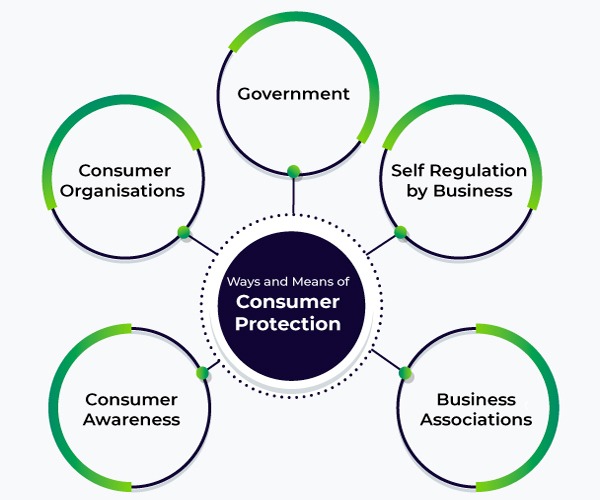
Consumer Rights Under the Act
The Consumer Protection Act, 2019 provides several important rights to consumers.
Major Consumer Rights
- Right to Safety – Protection against hazardous goods
- Right to Information – Complete product/service details
- Right to Choose – Access to a variety of options
- Right to be Heard – Consumer complaints must be considered
- Right to Seek Redressal – Legal remedy for grievances
- Right to Consumer Awareness – Knowledge about rights
These rights empower consumers to make informed decisions and seek justice.
Three-Tier Consumer Dispute Redressal System
The Act provides a structured system for resolving consumer disputes.
1. District Commission
- Handles cases up to ₹50 lakh
2. State Commission
- Handles cases between ₹50 lakh and ₹2 crore
3. National Commission
- Handles cases above ₹2 crore
This system ensures easy access to justice at different levels.
Who is a Consumer?
Under the Act, a consumer is any person who buys goods or avails services for consideration (paid or promised), including both offline and online transactions.
Important Points
- Includes e-commerce purchases
- Covers digital services and online platforms
- Excludes goods bought for resale or commercial use
Central Consumer Protection Authority (CCPA)
The Act established the Central Consumer Protection Authority (CCPA) to regulate and enforce consumer rights.
Functions of CCPA
- Investigate consumer rights violations
- Take action against unfair trade practices
- Order recall of unsafe goods
- Impose penalties on misleading advertisements
E-Commerce and Digital Protection
One of the major highlights of the Act is its focus on online transactions.
E-Commerce Rules
- Mandatory disclosure of product details
- Transparency in pricing
- Easy return and refund policies
- Accountability of online platforms
This protects consumers in the digital marketplace.
Unfair Trade Practices and Misleading Advertisements
The Act strictly prohibits businesses from engaging in unethical practices.
Examples
- False claims about products
- Hidden charges
- Fake discounts
- Misleading advertisements
The Central Consumer Protection Authority can impose heavy penalties on violators.
Product Liability Under the Act
The concept of product liability is a major addition.
What It Means
Manufacturers, sellers, and service providers are legally responsible for any harm caused by defective products or services.
Liable Parties
- Manufacturer
- Service provider
- Seller
This ensures accountability across the supply chain.
Complaint Filing Process
The Act simplifies the process of filing complaints.
Steps to File a Complaint
- Identify the issue (defective product/service)
- Collect bills and proof
- File complaint online or offline
- Attend hearings
- Receive compensation or relief
Consumers can now file complaints online from anywhere in India.
Penalties and Punishments
Strict penalties are imposed for violations.
Types of Penalties
- Monetary fines
- Imprisonment
- Ban on misleading advertisements
- Product recall
These provisions ensure compliance and protect consumers.
Mediation and Alternate Dispute Resolution
The Act promotes mediation to resolve disputes quickly.
Benefits of Mediation
- Faster resolution
- Lower costs
- Less formal process
- Mutually acceptable solutions
Importance of the Consumer Protection Act, 2019
The Act plays a crucial role in modern India.
Why It Is Important
- Protects consumers in digital age
- Encourages fair business practices
- Builds trust in the market
- Provides quick legal remedies
Importance of the Consumer Protection Act, 2019
The Act plays a crucial role in modern India.
Why It Is Important
- Protects consumers in digital age
- Encourages fair business practices
- Builds trust in the market
- Provides quick legal remedies
Conclusion
The Consumer Protection Act, 2019 is a powerful legal tool designed to safeguard the interests of consumers in an evolving marketplace. With strong provisions for product liability, e-commerce regulation, and dispute resolution, it ensures that consumers are protected from unfair practices.
By empowering consumers and holding businesses accountable, the Act promotes transparency, trust, and fairness in the economy. Understanding your rights under this law is essential to avoid exploitation and seek timely justice.