The Constitution of India is the supreme law of the country, forming the backbone of India’s legal and political system. It lays down the framework that defines the structure, powers, and functions of the government, as well as the rights and duties of citizens.
Adopted on 26th November 1949 and enforced on 26th January 1950, the Constitution reflects the vision of a democratic, sovereign, secular, and republic nation. It ensures justice, equality, and liberty for all citizens, making it one of the most comprehensive constitutions in the world.
Historical Background of the Constitution
The making of the Constitution was a historic process that involved extensive debate and discussion by the Constituent Assembly.
Key Historical Highlights
- Formation of Constituent Assembly in 1946
- Drafting led by Dr. B. R. Ambedkar
- Adoption on 26 November 1949
- Enforcement on 26 January 1950 (celebrated as Republic Day)
The Constitution was inspired by various global constitutions while maintaining India’s unique identity.
Salient Features of the Constitution of India
The Constitution of India is known for its depth and flexibility.
Major Features
- Lengthiest written constitution in the world
- Sovereign, Socialist, Secular, Democratic Republic
- Parliamentary system of government
- Federal structure with unitary features
- Independent judiciary
- Single citizenship
- Fundamental Rights and Duties
These features ensure a balanced and stable governance system
Structure of the Constitution
The Constitution is systematically divided for better governance.
Key Structural Elements
- Preamble – Introduction and guiding principles
- Parts – Divided into multiple sections covering different aspects
- Articles – Detailed provisions of law
- Schedules – Administrative details
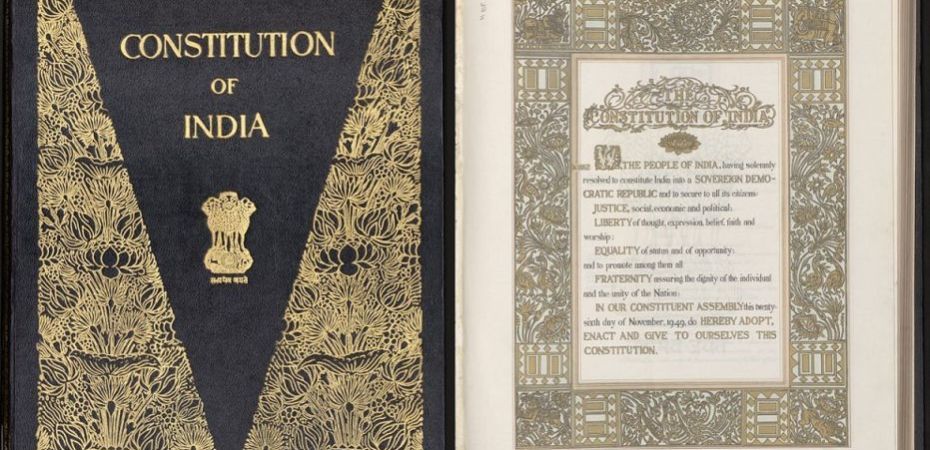
The Preamble – The Soul of the Constitution
The Preamble reflects the core values and philosophy of the Constitution.
Key Ideals
- Justice (social, economic, political)
- Liberty (thought, expression, belief)
- Equality (status and opportunity)
- Fraternity (unity and integrity)
It acts as a guiding light for interpreting the Constitution.
Fundamental Rights (Part III)
Fundamental Rights are essential for the development of individuals and protection of freedoms.
Types of Fundamental Rights
- Right to Equality
- Right to Freedom
- Right against Exploitation
- Right to Freedom of Religion
- Cultural and Educational Rights
- Right to Constitutional Remedies
These rights are enforceable by the Supreme Court of India, ensuring justice for citizens.
Fundamental Duties (Part IVA)
Fundamental Duties remind citizens of their responsibilities toward the nation.
Important Duties
- Respect the Constitution
- Promote harmony
- Protect public property
- Safeguard the environment
- Uphold unity and integrity of India
Although not enforceable, they are crucial for governance.
Directive Principles of State Policy (Part IV)
Directive Principles guide the government in making laws and policies.
Key Objectives
- Promote social and economic welfare
- Reduce inequality
- Ensure fair distribution of resources
- Provide equal justice and free legal aid
Although not enforceable, they are crucial for governance.
Fundamental Duties (Part IVA)
Fundamental Duties remind citizens of their responsibilities toward the nation.
Important Duties
- Respect the Constitution
- Promote harmony
- Protect public property
- Safeguard the environment
- Uphold unity and integrity of India
Union Government Structure
The Constitution defines the structure of the central government.
Key Components
- President – Head of State
- Prime Minister – Head of Government
- Council of Ministers
- Parliament (Lok Sabha & Rajya Sabha)
Judiciary System in India
The Constitution establishes an independent judiciary to protect laws and rights.
Hierarchy of Courts
- Supreme Court of India
- High Courts
- District and lower courts
The judiciary ensures the rule of law and protects citizens’ rights.
Amendment of the Constitution (Article 368)
The Constitution is flexible and can be amended to meet changing needs.
Types of Amendments
- Simple majority
- Special majority
- Special majority with state ratification
This flexibility ensures adaptability over time.
Challenges and Modern Relevance
Despite its strength, the Constitution faces challenges such as:
- Misuse of laws
- Delays in justice
- Political conflicts
- Need for reforms
However, it continues to evolve and remain relevant in modern India.
Conclusion
The Constitution of India is not just a legal document but the foundation of the nation’s democracy and governance. It defines the rights, responsibilities, and structure that guide India toward justice, equality, and progress.
Its comprehensive nature and adaptability have allowed it to remain relevant for decades, making it a living document that evolves with time. Understanding the Constitution is essential for every citizen, as it empowers individuals and ensures the smooth functioning of the country.