Discovering that your bank account has been frozen can be stressful, especially when you need immediate access to your money for personal, family, or business expenses. Many account holders assume that a frozen account means their funds are permanently inaccessible. However, that is not always the case.
Depending on the reason behind the freeze, there may be legal ways to access part or all of your funds. Understanding your rights, the applicable banking rules, and the proper legal process can help you resolve the issue efficiently.
In this guide, we explain how to withdraw money from a frozen bank account, common reasons for account freezes, and the legal remedies available to account holders.
What Is a Frozen Bank Account?
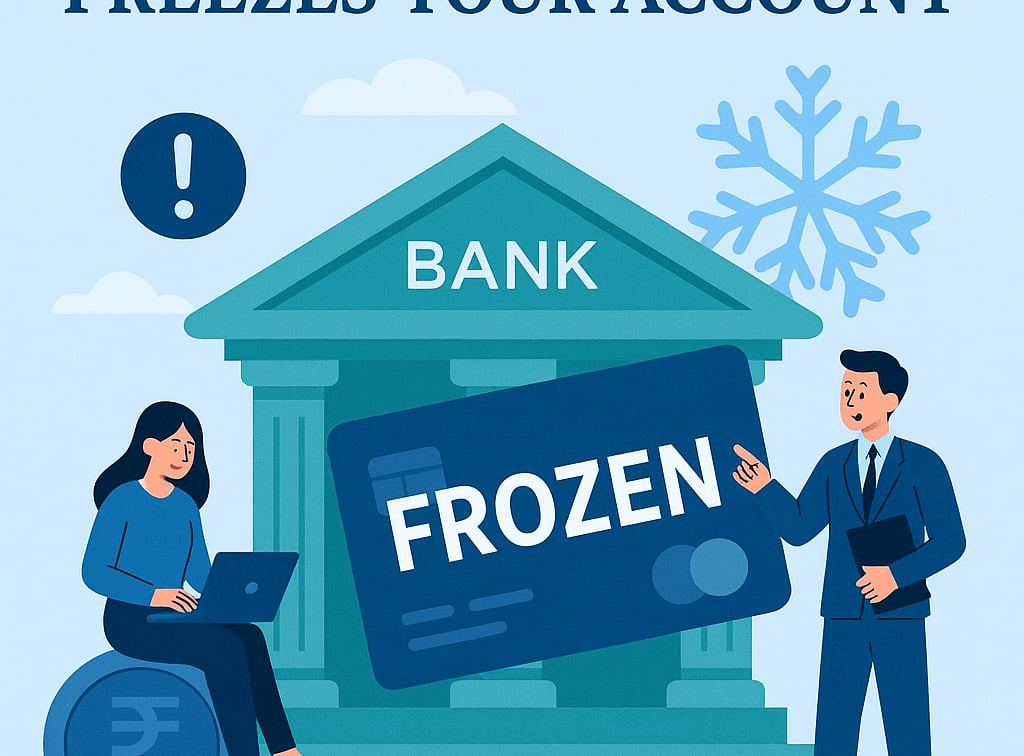
A frozen bank account is an account where the bank restricts withdrawals, transfers, UPI transactions, ATM withdrawals, cheque clearances, or other banking activities.
In many cases, deposits may still be accepted, but withdrawals are restricted until the issue is resolved.
A bank account may be frozen by:
- The bank itself
- Law enforcement agencies
- Cyber crime authorities
- Income tax authorities
- Court orders
- Regulatory agencies
Common Reasons Why Bank Accounts Get Frozen
1. Incomplete KYC Verification
Banks are required to maintain updated customer records. Failure to update Aadhaar, PAN, address proof, or other KYC documents can result in restrictions.
2. Suspicious Transactions
Unusual account activity, large cash deposits, or transactions inconsistent with the customer’s profile may trigger compliance reviews.
3. Cyber Crime Complaints
If a cyber fraud complaint is linked to your account, authorities may instruct the bank to freeze the account during the investigation.
4. Court Orders
Courts may order account freezes in civil disputes, recovery proceedings, family disputes, or criminal investigations.
5. Income Tax or Government Action
Tax investigations and regulatory actions may result in temporary restrictions on banking operations.
6. Dormant Account Status
Accounts that remain inactive for extended periods may require reactivation before withdrawals can be made.
Can You Withdraw Money from a Frozen Account?
The answer depends on the reason for the freeze.
Situation 1: KYC-Related Freeze
If your account is frozen due to incomplete KYC, you can usually restore access by updating the required documents.
Once verification is completed, withdrawal facilities are generally restored.
Situation 2: Bank Compliance Review
If the bank has frozen the account for verification purposes, providing satisfactory documentation may result in the removal of restrictions.
Situation 3: Cyber Crime Freeze
In cyber crime cases, withdrawal rights depend on the investigating authority and the facts of the case.
You may need legal representation to seek partial or complete release of funds.
Situation 4: Court-Ordered Freeze
If a court has ordered the freeze, withdrawals typically require court approval or modification of the order.
Common Reasons Why a Bank Account Gets Frozen
Understanding why your account has been frozen is the first step toward recovering access to your money.
1. Incomplete KYC Compliance
Banks are required to comply with Know Your Customer (KYC) regulations. Failure to update KYC documents can result in account restrictions.
Common issues include:
- Expired identity documents
- Address verification pending
- PAN or Aadhaar mismatch
- Missing customer information
2. Suspicious Transaction Activity
Banks monitor unusual transactions to prevent fraud and money laundering.
Examples include:
- Large unexpected deposits
- Frequent high-value transfers
- Transactions from unknown sources
- International transfers triggering compliance alerts
3. Cyber Crime Investigation
Many accounts are frozen after complaints related to:
- Online fraud
- UPI scams
- Cryptocurrency disputes
- Unauthorized transfers
- Digital payment fraud
In such cases, cyber crime authorities may instruct banks to freeze the account during investigation.
4. Court Orders
Courts may order the freezing of bank accounts during:
- Civil disputes
- Recovery proceedings
- Family law cases
- Property disputes
- Criminal investigations
Can You Withdraw Money from a Frozen Bank Account?
The answer depends on the reason for the freeze.
Full Freeze
When the account is completely frozen, withdrawals are generally not permitted until the restriction is lifted.
Partial Freeze
In some cases, authorities may allow:
- Withdrawal of a specified amount
- Salary withdrawals
- Essential living expenses
- Business operational expenses
This often requires approval from the concerned authority or court.
Court-Approved Access
Courts may grant temporary access to funds for:
- Medical emergencies
- Educational expenses
- Family maintenance
- Business continuity
Legal representation is usually necessary to obtain such permissions.
Steps to Withdraw Money from a Frozen Bank Account
Step 1: Contact Your Bank Immediately
Visit your branch and request:
- Reason for the account freeze
- Written communication regarding restrictions
- Authority responsible for the freeze
Obtain copies of any notices or communications.
Step 2: Complete Pending KYC Requirements
If the freeze is KYC-related, submit:
- Aadhaar Card
- PAN Card
- Passport
- Driving License
- Utility Bills
- Updated photographs
Most KYC-related freezes are resolved quickly after document verification.
Step 3: Identify the Freezing Authority
The freeze may have been initiated by:
- Bank compliance department
- Cyber Crime Cell
- Police authorities
- Court
- Income Tax Department
- Enforcement agencies
Knowing the authority helps determine the correct legal remedy.
Step 4: Gather Relevant Documents
Prepare:
- Bank statements
- Transaction records
- Source of funds proof
- Identity documents
- Income records
- Complaint copies (if applicable)
Strong documentation significantly improves your chances of resolving the issue.
Step 5: Seek Legal Assistance
If the freeze continues despite compliance, legal intervention may be required.
An experienced advocate can:
- Communicate with authorities
- File legal representations
- Challenge unlawful freezes
- Seek partial fund release
- Approach courts when necessary
Step 6: Submit a Representation
A formal representation may be submitted explaining:
- Nature of transactions
- Source of funds
- Purpose of transfers
- Supporting documentation
Many cases are resolved after satisfactory clarification.
Legal Remedies for Frozen Bank Accounts
Filing a Representation Before Authorities
Lawyers can submit detailed legal representations requesting:
- Removal of restrictions
- Review of evidence
- Release of legitimate funds
Approaching the Court
Where necessary, legal proceedings may be initiated to:
- Challenge arbitrary freezing orders
- Seek withdrawal permissions
- Obtain interim relief
- Protect constitutional rights
Cyber Crime Related Cases
In cyber fraud matters, lawyers can:
- Coordinate with investigating agencies
- Submit transaction evidence
- Establish innocence
- Request account de-freezing
What Documents May Be Required for Unfreezing?
Common documents include:
- Aadhaar Card
- PAN Card
- Passport
- Bank statements
- Income proof
- Business registration documents
- GST certificates
- Transaction receipts
- Source of funds explanation
- Legal notices or court documents
Requirements vary depending on the nature of the freeze.
How Long Does It Take to Unfreeze a Bank Account?
The timeline depends on the cause.
| Reason | Estimated Time |
|---|---|
| KYC Issues | 1–7 Days |
| Bank Compliance Review | 7–30 Days |
| Cyber Crime Investigation | Several Weeks to Months |
| Court Matter | Depends on Court Proceedings |
| Tax Investigation | Varies by Case |
Prompt action and proper legal guidance can help speed up the process.
Why Choose Top Legal Help?
At Top Legal Help, our experienced legal professionals assist clients facing bank account freezes, cyber fraud allegations, financial disputes, and regulatory actions.
Our services include:
✅ Bank account freeze consultation
✅ Cyber crime legal assistance
✅ Court representation
✅ KYC compliance guidance
✅ Financial dispute resolution
✅ Legal notices and representations
✅ Account de-freezing assistance
We understand the urgency of frozen account situations and work diligently to help clients regain access to their funds through lawful and effective legal solutions.
Conclusion
A frozen bank account can disrupt personal finances and business operations, but it does not always mean permanent loss of access to your money. Understanding the reason behind the freeze, cooperating with authorities, completing compliance requirements, and seeking professional legal assistance are key steps toward resolution.
If you need assistance regarding a frozen bank account, cyber crime investigation, banking dispute, or account de-freezing process, Top Legal Help can help you understand your legal rights and guide you through the appropriate legal procedures.
Call to Action
Is Your Bank Account Frozen?
Don’t let a frozen account affect your financial stability. Get professional legal guidance from Top Legal Help today.
📞 Call Now: +91 7599288994
📧 Email: info@toplegalhelp.com
🌐 Website: Top Legal Help
Speak with our legal experts and take the first step toward restoring access to your funds.