Finding the right civil court lawyer in Moradabad can make a significant difference when you are dealing with a property dispute, recovery matter, contract disagreement, family-related civil issue, injunction, ownership dispute, or another civil legal matter.
Civil cases often involve detailed documents, evidence, legal notices, court procedures, and multiple hearings. An experienced advocate can help you understand your legal position, prepare the necessary documents, represent you before the appropriate court, and guide you through each stage of the case.
At Top Legal Help, we provide legal guidance for individuals and businesses dealing with civil and related legal matters in Moradabad and across India.
What Does a Civil Court Lawyer Do?
A civil court lawyer represents clients in disputes that generally involve private rights, property, money, contracts, family-related civil claims, and other non-criminal matters.
A civil advocate may assist with:
- Filing or defending civil suits
- Property and land disputes
- Ownership and title disputes
- Partition and inheritance matters
- Recovery of money
- Contract disputes
- Rent and landlord-tenant disputes
- Injunction matters
- Declaration suits
- Consumer-related disputes
- Legal notices
- Documentation and agreements
- Civil appeals and other court proceedings
The exact legal remedy depends on the facts, documents, limitation period, jurisdiction, and nature of the dispute.
Why Choose Civil Court Lawyers in Moradabad?
Moradabad has a large legal community and clients may need representation in matters connected with the District Court and other appropriate courts. Current lawyer directories also show advocates practicing civil matters around District Court Moradabad and Civil Lines.
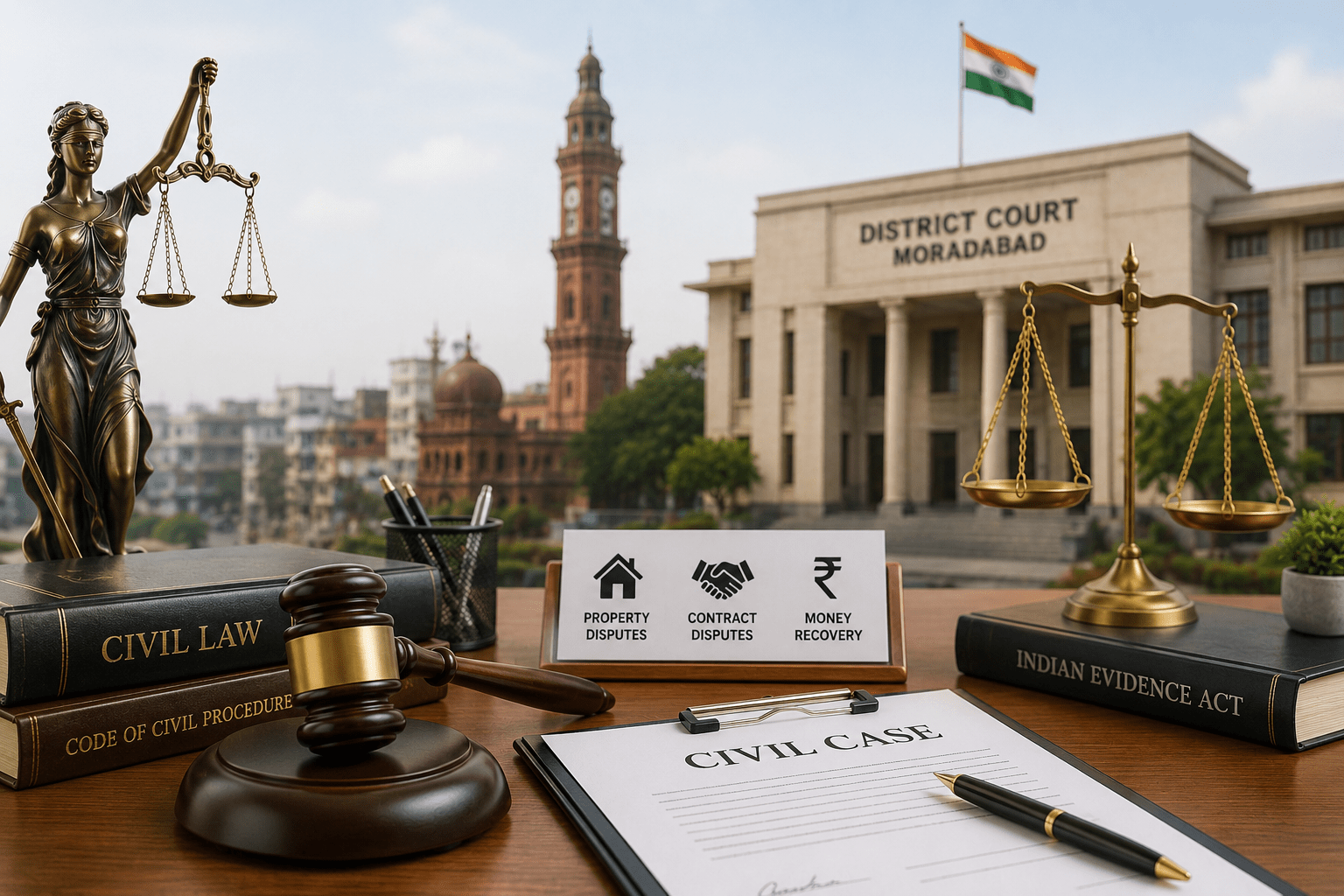
Choosing a lawyer familiar with local court procedures can help you better understand:
- Where your case should be filed
- Which documents may be required
- How to prepare your case
- What legal remedies may be available
- How court hearings generally proceed
- How to respond to notices or claims
- Whether settlement or litigation may be appropriate
For legal matters, however, every case should be assessed individually rather than relying only on general information.
Common Civil Cases Handled by Lawyers in Moradabad
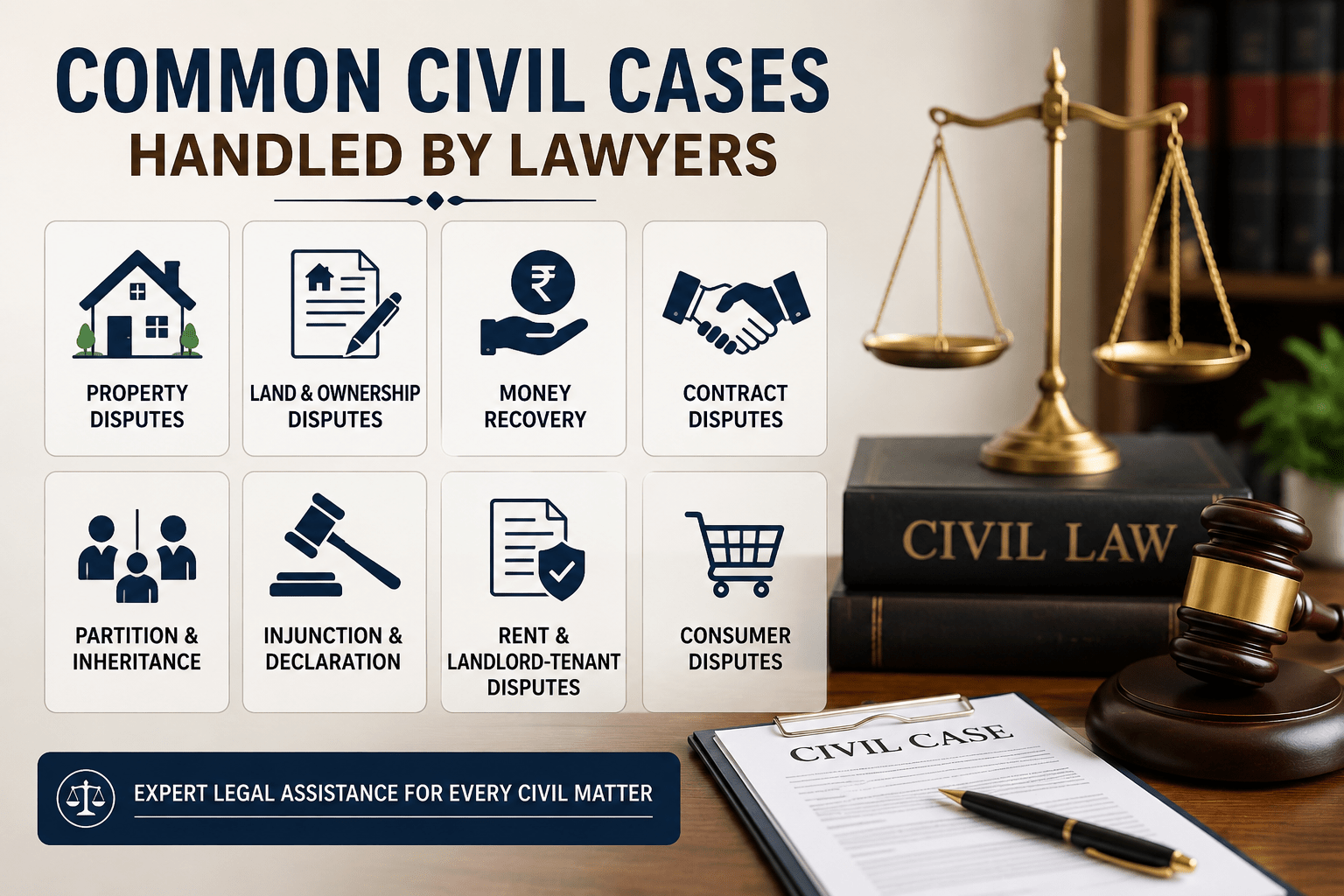
1. Property Disputes
Property disputes are among the common reasons people seek civil legal assistance.
Disputes may involve:
- Ownership
- Possession
- Boundary issues
- Sale agreements
- Property documents
- Partition
- Inheritance
- Illegal possession
- Title disputes
- Property transactions
If you are facing a property dispute, obtaining legal advice before signing documents or taking legal action can help you understand your options.
You can also explore our [Property Dispute Legal Services] for more information about property-related legal assistance.
2. Land and Ownership Disputes
Land disputes can become complicated when multiple parties claim ownership or possession.
A civil lawyer can review relevant documents such as sale deeds, previous title documents, agreements, revenue records, and other available evidence and advise you regarding possible legal remedies.
3. Money Recovery Cases
If an individual or business has failed to repay money that is legally due, civil legal remedies may be available depending on the circumstances.
A lawyer can help evaluate:
- Loan or payment documents
- Written agreements
- Invoices
- Acknowledgements
- Promissory documents
- Correspondence
- Payment records
A legal notice may sometimes be an appropriate first step before litigation.
4. Contract Disputes
Businesses and individuals frequently enter into agreements for property, services, employment, construction, supply, or other transactions.
A disagreement regarding contractual obligations may require legal analysis of the agreement and supporting evidence.
Our [Business Law Legal Services] can also be useful for businesses seeking assistance with agreements and commercial legal matters.
5. Partition and Inheritance Matters
Family property disputes may arise when members disagree about ownership, succession, partition, or possession.
These cases can involve extensive documentation and family history. A civil lawyer can review the available documents and explain the possible legal process.
6. Injunction and Declaration Matters
In appropriate circumstances, a party may seek a declaration of legal rights or an injunction concerning property or another civil dispute.
Because the correct remedy depends heavily on the facts, it is advisable to obtain case-specific legal advice before filing proceedings.
How to Choose the Right Civil Court Lawyer in Moradabad
Before hiring a civil advocate, consider the following factors:
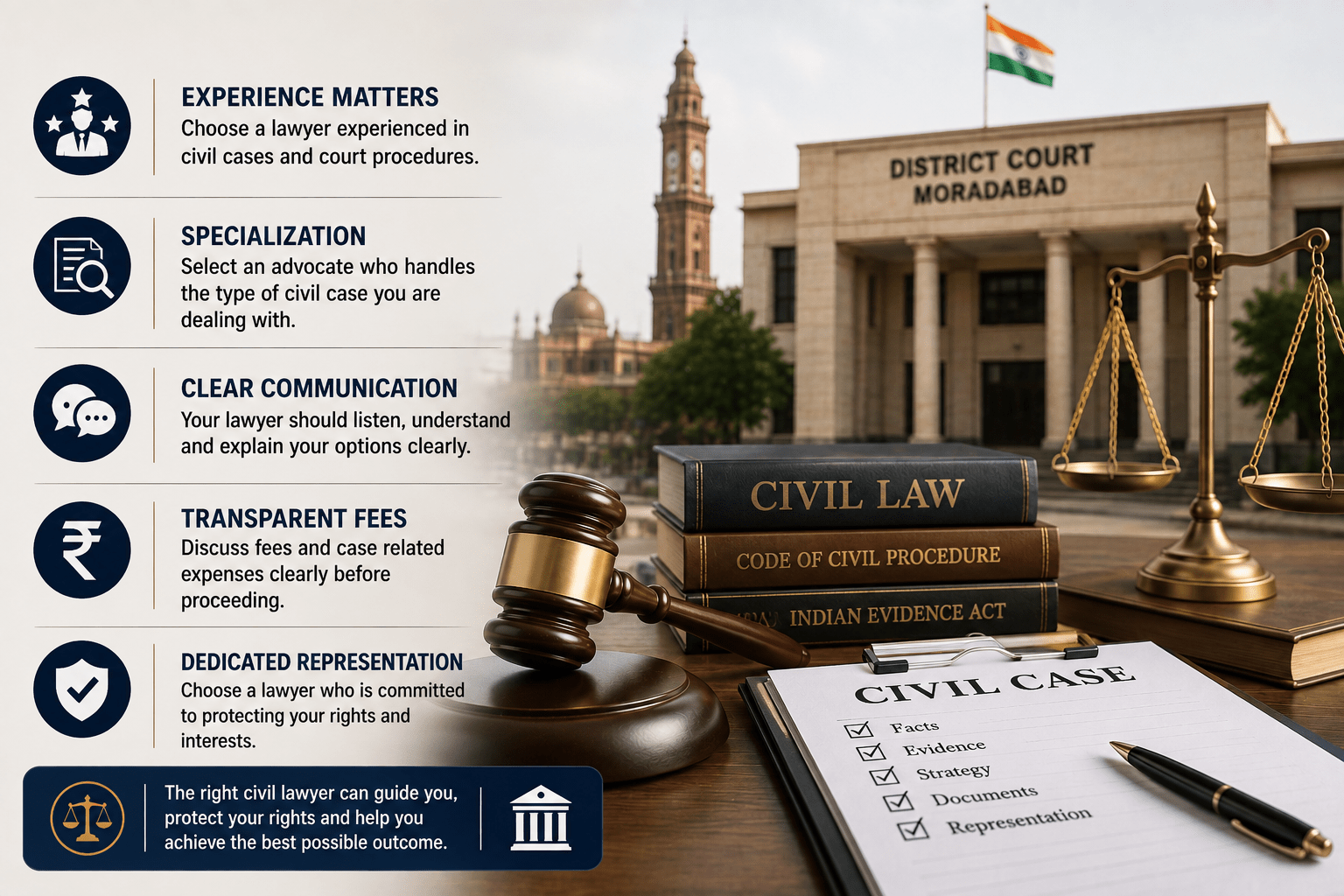
Experience in Your Type of Case
A lawyer experienced in property disputes may be more suitable for a property matter, while a contractual dispute may require experience with commercial and contract law.
Understanding of the Facts
Your lawyer should take time to understand the complete background of your dispute rather than relying on only one document or one side of the story.
Document Review
Civil litigation frequently depends on documents. Ask the lawyer to review the important documents connected with your matter.
Clear Communication
A good lawyer should explain the legal process, possible options, risks, and expected steps in language you can understand.
Documents You Should Take to a Civil Lawyer
When meeting a civil court lawyer in Moradabad, carry all relevant documents rather than only the most recent papers.
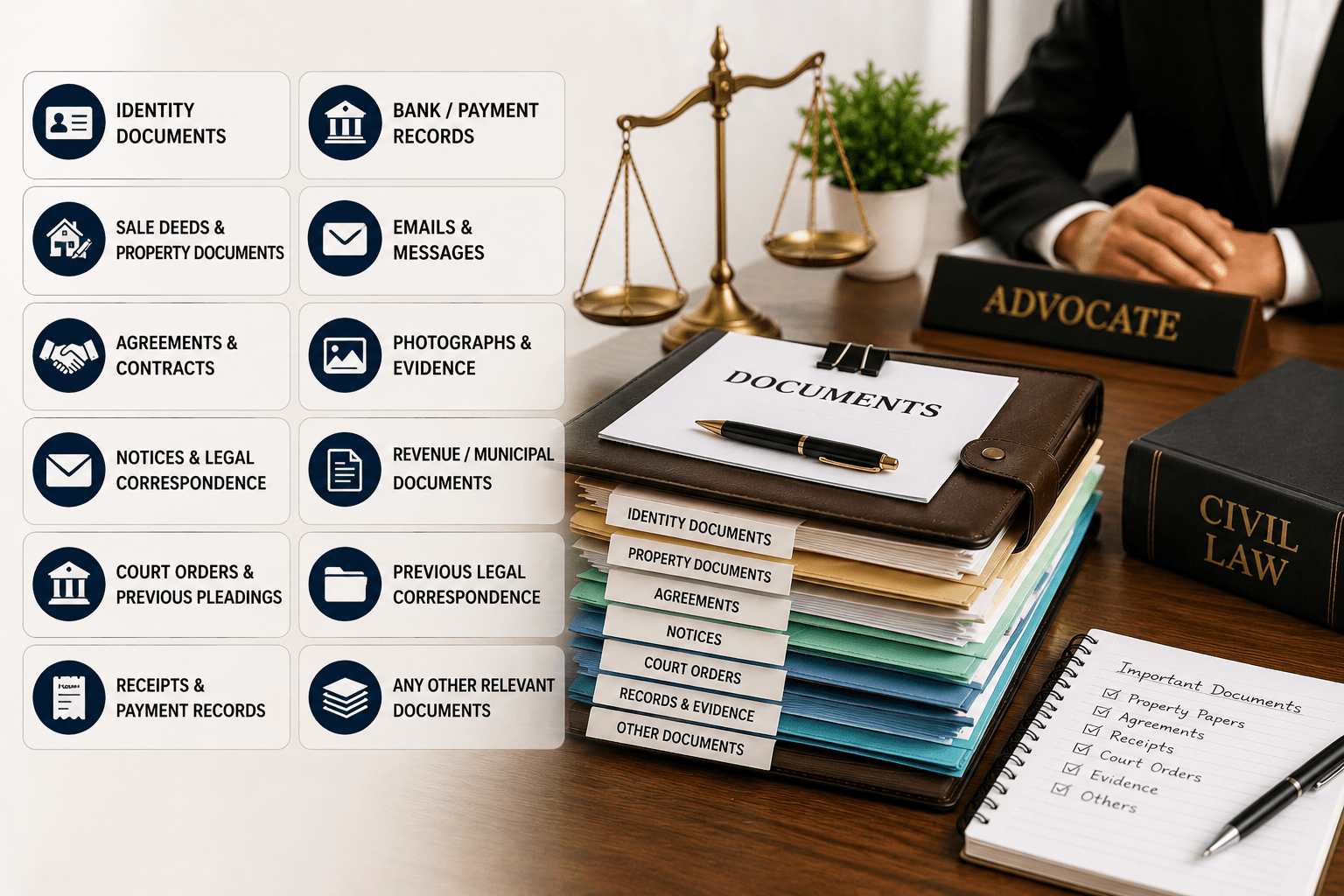
Depending on the case, these may include:
- Identity documents
- Sale deeds
- Property documents
- Agreements
- Notices
- Court orders
- Previous pleadings
- Receipts
- Bank/payment records
- Emails or messages
- Photographs
- Revenue or municipal documents
- Previous legal correspondence
Organizing your documents chronologically can also make it easier for your lawyer to understand the dispute.
Civil Court Case Process in India
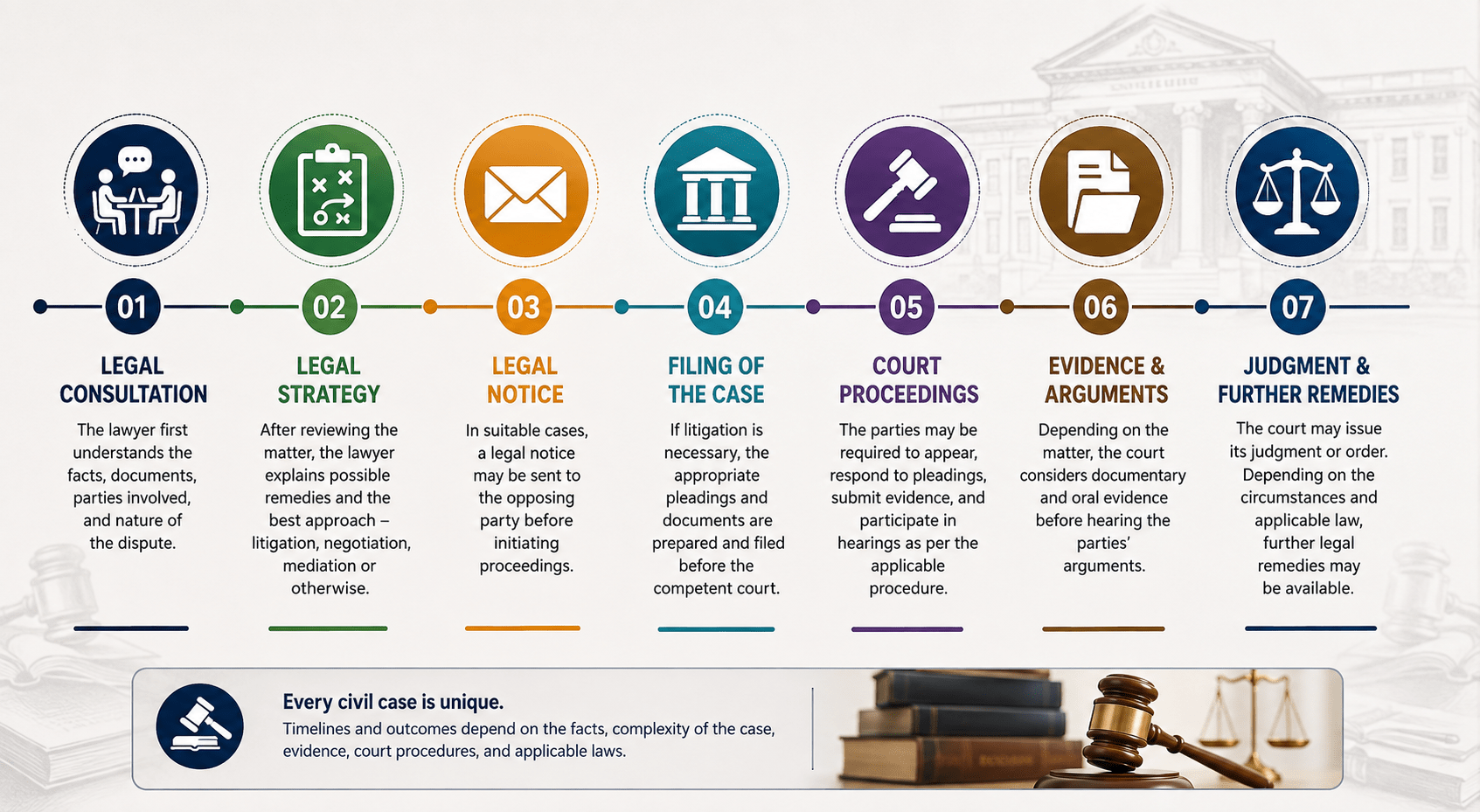
Although every case is different, a civil dispute may generally involve several stages.
Step 1: Legal Consultation
The lawyer first understands the facts, documents, parties involved, and nature of the dispute.
Step 2: Legal Strategy
After reviewing the matter, the lawyer can explain possible remedies and whether litigation, negotiation, mediation, or another approach may be appropriate.
Step 3: Legal Notice
In suitable cases, a legal notice may be sent to the opposing party before initiating proceedings.
Step 4: Filing of the Case
If litigation is necessary, the appropriate pleadings and documents are prepared and filed before the competent court.
Step 5: Court Proceedings
The parties may be required to appear, respond to pleadings, submit evidence, and participate in hearings according to the applicable procedure.
Step 6: Evidence and Arguments
Depending on the matter, the court may consider documentary and oral evidence before hearing the parties’ arguments.
Step 7: Judgment and Further Remedies
The court may issue its judgment or order. Depending on the circumstances and applicable law, further legal remedies may be available.
Why Early Legal Advice Matters
Many civil disputes become more difficult when parties delay taking legal advice.
Early consultation can help you:
- Preserve important documents
- Understand possible limitation issues
- Avoid unnecessary mistakes
- Respond properly to legal notices
- Assess the strength of your case
- Understand potential remedies
- Consider settlement where appropriate
If you have received a court notice or legal notice, do not ignore it. Consult a qualified advocate promptly.
Civil Lawyer vs Criminal Lawyer – What Is the Difference?
A civil lawyer generally deals with disputes involving private rights, property, contracts, money, possession, and similar civil claims.
A criminal lawyer, on the other hand, generally represents clients in matters involving alleged offences and criminal proceedings.
Some disputes can involve both civil and criminal aspects. In such circumstances, you may need advice concerning both areas of law.
For criminal matters, you can explore our [Criminal Lawyers and Legal Services].
Frequently Asked Questions
Who is a civil court lawyer?
A civil court lawyer is an advocate who represents clients in civil disputes and proceedings. Depending on their practice, they may handle property, recovery, contract, injunction, inheritance, partition, consumer, and other civil matters.
How much does a civil lawyer in Moradabad charge?
Legal fees vary according to the lawyer, complexity of the case, number of hearings, documentation required, court-related expenses, and other factors. It is best to discuss fees directly with the advocate before proceeding.
Can a civil lawyer help with a property dispute?
Yes. Lawyers handling civil and property matters can advise clients regarding ownership, possession, partition, title, boundary, sale agreements, and other property-related disputes.
For additional information, visit our [Property Lawyer Services] page.
Should I send a legal notice before filing a civil case?
A legal notice may be appropriate in some disputes, but it is not automatically required for every civil matter. The appropriate approach depends on the facts and applicable law.
How long does a civil case take?
There is no fixed timeline applicable to every civil case. Duration can depend on the complexity of the dispute, evidence, court schedule, procedural steps, and whether the matter is settled or contested.
Can I settle a civil dispute without going through a full trial?
In appropriate cases, parties may explore negotiation, mediation, or other settlement mechanisms. Whether settlement is advisable depends on the facts and legal position of the dispute.
A civil court lawyer is an advocate who represents clients in civil disputes and proceedings. Depending on their practice, they may handle property, recovery, contract, injunction, inheritance, partition, consumer, and other civil matters.
Legal fees vary according to the lawyer, complexity of the case, number of hearings, documentation required, court-related expenses, and other factors. It is best to discuss fees directly with the advocate before proceeding.
Yes. Lawyers handling civil and property matters can advise clients regarding ownership, possession, partition, title, boundary, sale agreements, and other property-related disputes.
For additional information, visit our [Property Lawyer Services] page.
A legal notice may be appropriate in some disputes, but it is not automatically required for every civil matter. The appropriate approach depends on the facts and applicable law.
There is no fixed timeline applicable to every civil case. Duration can depend on the complexity of the dispute, evidence, court schedule, procedural steps, and whether the matter is settled or contested.
In appropriate cases, parties may explore negotiation, mediation, or other settlement mechanisms. Whether settlement is advisable depends on the facts and legal position of the dispute.
Get Legal Assistance for Civil Matters in Moradabad
If you are searching for civil court lawyers in Moradabad, the first step is to understand your legal issue and collect the relevant documents.
Top Legal Help provides legal assistance across multiple practice areas, including civil, property, family, criminal, banking, cyber, and other legal matters. Our website also provides resources covering different areas of Indian law.
You can contact Top Legal Help for a legal consultation to discuss your matter and understand the next steps.
Important: This article is for general informational purposes and does not constitute legal advice. The appropriate legal remedy depends on the facts and documents of each individual case. Consult a qualified advocate for advice specific to your matter.